If you have never brushed a dog's teeth, the first attempt usually goes like this: the dog licks the toothpaste, clamps his mouth, and treats the brush as a chew toy. That is normal, and it is fixable. This first-timer's walkthrough takes it step by step, from letting the dog taste toothpaste to a full minute of brushing, and it draws the line clearly between home care, groomer help, and veterinary dentistry in Lancaster.
Puppy Palooza Pet Spa & Boarding handles baths, grooms, and nail trims, and staff get asked about teeth constantly, because groomers see mouths up close. Here is what actually happens at each level of care.
Step zero: understand plaque and tartar
Before the steps, one distinction runs the whole subject. Plaque is soft film that forms daily and brushes off. Tartar is plaque that has hardened on the tooth, usually visible as yellow-brown crust near the gumline, and it does not brush off at home. Brushing is prevention. Tartar removal is treatment, and treatment belongs to a veterinarian working under anesthesia, where teeth can be scaled below the gumline and checked for hidden damage.
That is why a groomer's toothbrushing and a vet's dental cleaning are not two prices for the same job. They are different jobs. Keeping them straight protects your dog from the worst bargain in pet care: pretty-looking crowns with disease continuing underneath.
Your first two weeks of brushing, step by step
- Days one to three: flavor only. Put a pea-sized amount of dog toothpaste on your finger and let the dog lick it off. That is the whole session. Dog toothpaste is made to be swallowed; never use human toothpaste, which contains ingredients dogs should not ingest.
- Days four to six: touch the teeth. With toothpaste on your finger, slide it along the outer surfaces of the front teeth and the big canine teeth for a few seconds. Stop while the dog is still cooperating and praise like he did something impressive.
- Week two: add a tool. Introduce a finger brush or a soft dog toothbrush with toothpaste. Work the outer surfaces of one side, using small circles at the gumline, then switch sides if patience allows.
- Reach the back teeth. The large upper cheek teeth collect the most tartar, so they matter most. Lift the lip at the corner of the mouth rather than prying the jaws open, and brush what you can reach in short passes.
- Build to about a minute. A full mouth takes roughly a minute once you both know the routine. Work up to it over several sessions; a calm forty seconds beats a forced two minutes.
- Set the rhythm. Daily is ideal because plaque hardens within a few days. Several times a week is the realistic target for many Lancaster households and still makes a real difference.
- Check as you go. Every week or so, look at the gumline: pink is good, a red puffy rim is an early warning, and bad odor, loose teeth, or dropped kibble means a vet visit belongs on the calendar.
What happens at the groomer
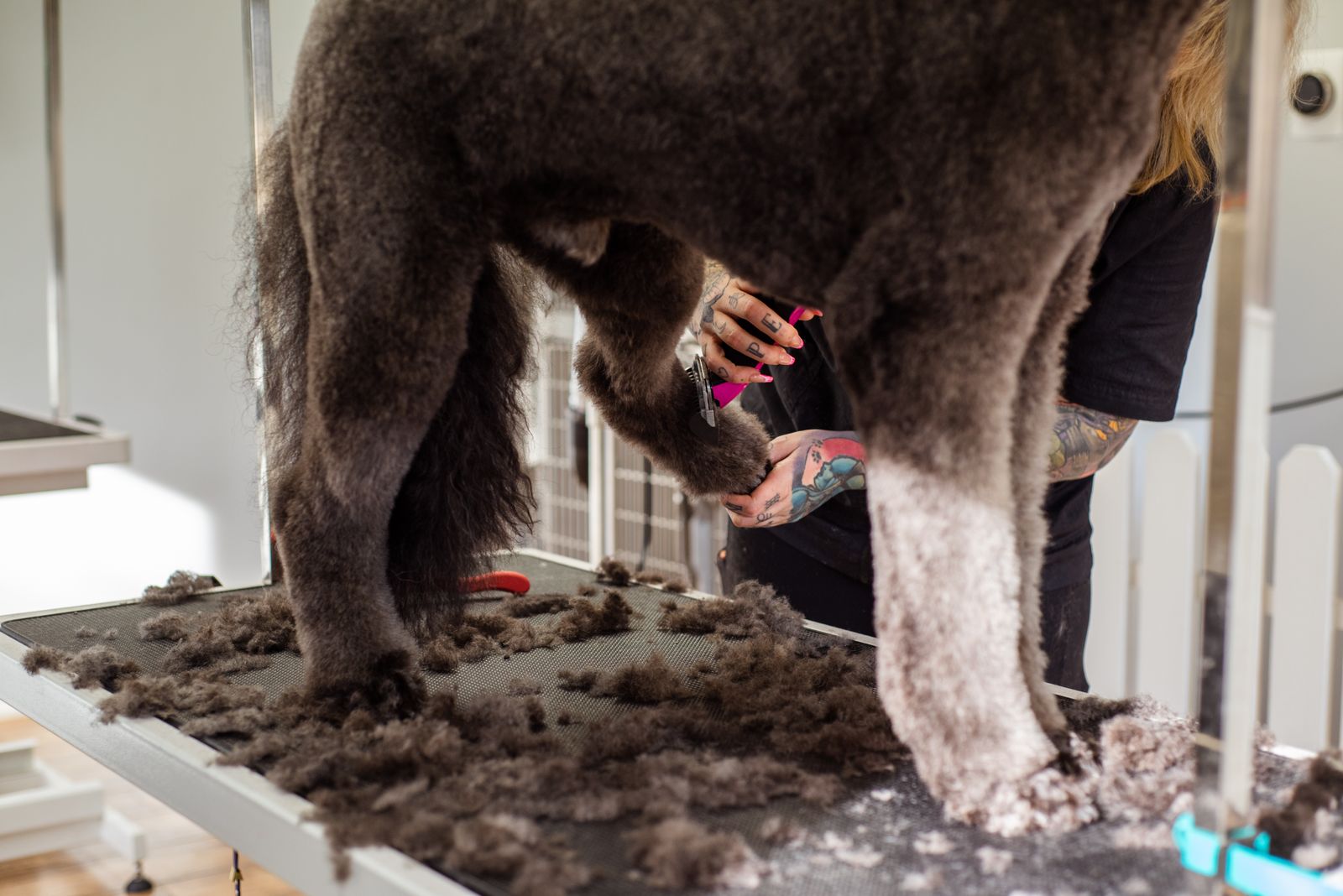
At a grooming appointment, teeth work is surface work: brushing with dog toothpaste, wiping the teeth, and a look inside the mouth while the dog is calm on the table or in the tub. Good groomers report what they find, and those reports are worth hearing. Tartar building on the back teeth, a broken tooth you had not noticed, gums that bleed at a touch: a groomer sees these things weeks or months before they would otherwise come to light, simply because few owners lift the lip at home.
What does not happen at a groomer is scaling. Any service promising to scrape tartar and fully clean teeth without anesthesia is cleaning only what shows, above the gumline, while the bacteria doing the damage sit below it. Veterinary dentistry uses anesthesia precisely because the important work is below the gumline, on a patient who must hold perfectly still, with probing and X-rays to find teeth that look fine and are not.
Starting with puppies, and starting late
Puppies are the easy students. Handle the mouth during the normal cuddling and chaos of puppyhood, touch teeth and gums briefly and often, and a puppy grows into a dog for whom brushing is just another routine, like nail trims. Lancaster owners bringing puppies in for early grooms are building exactly this tolerance, and it pays off for years.
Starting with an adult dog who has never had his teeth brushed takes the same steps, slower. Some adult dogs accept the routine in a week. Others need a month of flavor-only sessions and brief touches, and a few, especially dogs whose mouths already hurt, need a veterinary check first, because pain explains resistance better than stubbornness does. If your dog's gums are red and his breath is strong, get the mouth healthy first, then build the habit on a mouth that does not hurt.
Helpers that actually help
Dental chews carrying the Veterinary Oral Health Council seal have been tested and can support brushing, especially on days you miss. Dental diets and water additives contribute at the margins. Very hard chews, bones and antlers, break teeth often enough that many vets advise against them. None of the helpers replace the brush, and none remove tartar. Think of them as the supporting cast for a one-minute daily habit that does most of the work.
Common questions
What if my dog just licks the toothpaste and will not let me brush?
That is the normal starting point. Spend several days at the licking stage, then add brief finger touches along the teeth. Most dogs accept a brush within two weeks of short, calm sessions.
Is anesthesia really necessary for a dental cleaning?
Yes, for a complete one. Scaling below the gumline, probing, and X-rays cannot be done properly or painlessly on an awake dog, and that below-the-gumline work is where periodontal disease is treated.
How do I know if my dog already needs a vet dental?
Visible tartar crust, red or bleeding gums, strong breath odor, chewing on one side, or dropping food all point that way. When in doubt, ask at your next vet visit for a mouth check.
Photos in this guide are representative stock images.
← All guides from Puppy Palooza Pet Spa & Boarding← Back to Puppy Palooza Pet Spa & Boarding