Ears are easy to forget until a dog starts scratching, shaking his head, or producing a smell that announces itself when he climbs into your lap. In Lancaster, floppy-eared and fluffy-eared dogs run the highest risk, because spaniel ears, retriever ears, poodle ears, and doodle ears all do the same thing: they cover the ear canal, hold warmth and moisture in, and give yeast and bacteria the quiet, damp space they prefer. Routine cleaning is simple and cheap in effort. Neglected ears are neither.
Puppy Palooza Pet Spa & Boarding sees ears at every bath and groom, and groomers develop a good eye for the difference between a dirty ear and a diseased one. This guide covers the cleaning you can do at home, and the signs that mean the next stop is a veterinarian, not a grooming table.
Why ear shape decides the risk
A dog's ear canal is L-shaped, dropping down and then turning inward, which already makes drainage poor compared with a human ear. Add a heavy ear flap lying over the opening, as on spaniels and retrievers, and air barely circulates. Add hair growing inside the canal, as on poodles and many doodles, and debris and wax get trapped against the skin of the canal. Then add Piedmont life: summer humidity, swimming, baths, and pollen-season scratching that drives moisture and dirt deeper.
None of this makes infection inevitable. It makes maintenance worthwhile. Dogs with upright, open ears can go much longer between cleanings than a cocker spaniel who swims every weekend, and a sensible routine matches the dog's ears, habits, and history rather than a generic calendar.
The cost of waiting, in plain terms
An ear that needs cleaning is a five-minute job. An ear that has been dirty and damp for weeks becomes an itchy ear, then a scratched and shaken ear, then an infected ear that hurts enough to change how the dog lets anyone near his head. Infections left longer can thicken the canal, deepen toward the middle ear, and turn a dog who loved grooming into one who snaps at ear handling, which makes every future cleaning harder.
The pattern is the familiar one: small problems are cheap in effort and stay small only while someone is paying attention. The numbers below are the working facts groomers and vets use to judge ear care.
Cleaning an ear the right way
Use a veterinary ear cleaner made for dogs, cotton balls or gauze, and treats. Lift the ear flap, fill the canal gently with solution until you can see it, and massage the base of the ear for twenty seconds or so. You should hear a squelching sound, which means the solution is working down where the debris is. Let the dog shake, because the shake brings loosened material up from the bend in the canal. Then wipe what you can see with the cotton. Repeat until the cotton comes out fairly clean.
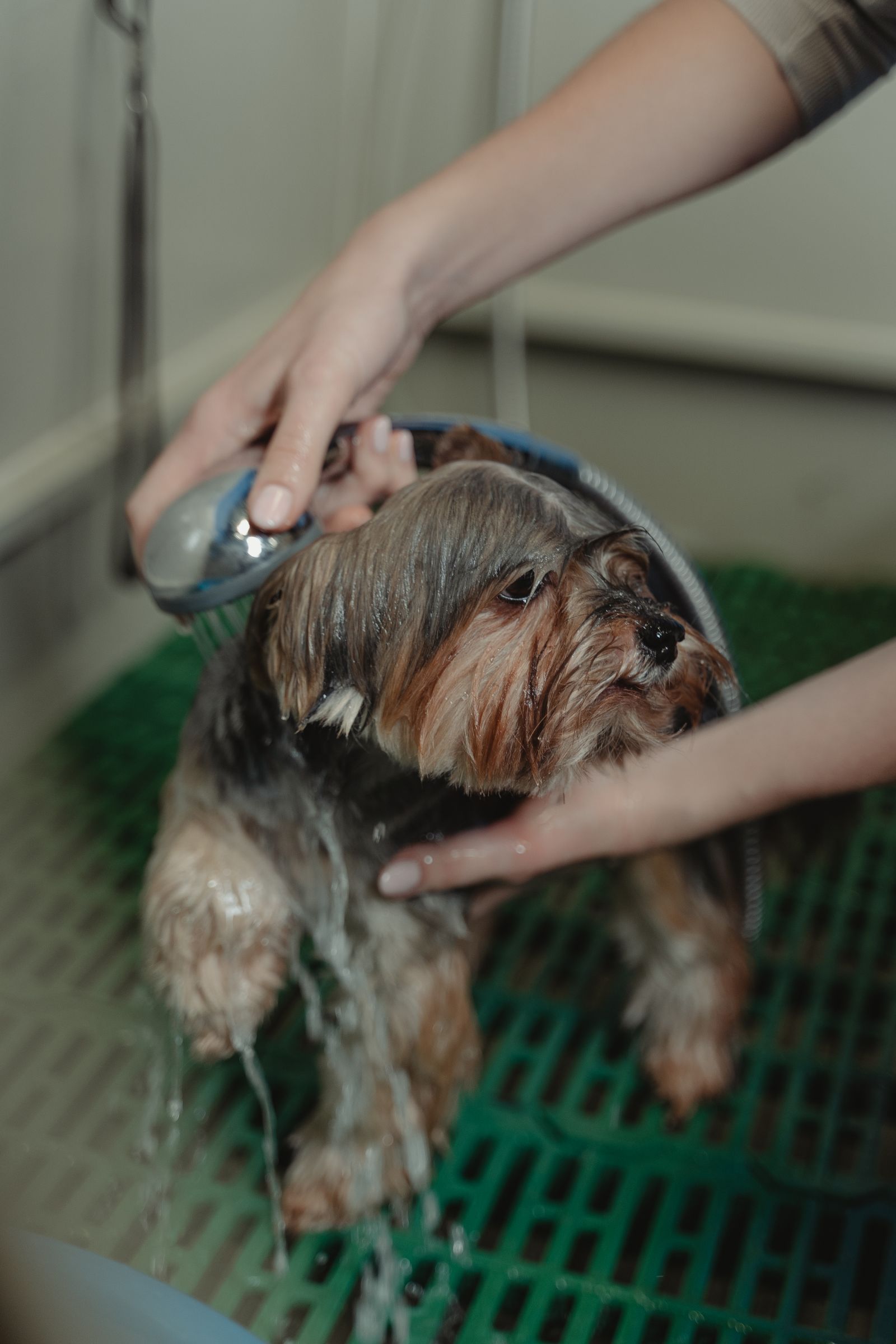
Never push cotton swabs or tools down into the canal. You cannot see the bend, and packing debris deeper or nicking the canal lining turns a cleaning into a problem. Skip home remedies like peroxide or alcohol in the ears: both sting raw skin and dry the canal in ways that tend to backfire. And keep bath water out of the ears in the first place, with cotton placed loosely at the opening during baths for dogs prone to trouble.
The hair-in-the-canal question
Poodle-type ears grow hair inside the canal, and tradition says to pluck it so air can circulate. Current veterinary thinking is more divided: plucking can irritate the canal and, in an ear that is already inflamed, make things worse. The practical middle ground most groomers and vets land on is to remove loose hair gently in healthy ears when it traps debris, leave the ears of a dog with no ear history mostly alone, and never pluck an ear that is red, sore, or smelly. That ear needs a vet first.
What you can do at home is trim nothing inside the canal and simply keep watch. If your groomer mentions heavy canal hair or buildup at appointments, fold that into your cleaning schedule and mention it at vet visits, where the canal can be examined properly with a scope.
Signs that mean vet, not groomer
Book a veterinary visit instead of cleaning when you see or smell any of the following: a strong sweet or yeasty odor, or a sharp foul one; dark discharge resembling coffee grounds, or yellow-green discharge; redness and swelling; a dog who yelps, pulls away hard, or guards the ear; scratching that has broken the skin; head tilting or loss of balance. Cleaning an infected ear at home delays treatment and can hurt badly, and some cleaners should not be used if the eardrum may be damaged, which only a vet exam can judge.
Groomers in Lancaster will, and should, stop and tell you when an ear crosses this line at an appointment. Treat that as good service, not an upsell. The groom can finish another day; the ear needs medicine first.
Common questions
How often should I clean my spaniel's ears?
For most floppy-eared dogs, every one to two weeks is a sensible rhythm, plus after swimming or baths. Dogs with a history of infections may need a schedule set by their veterinarian.
Can I use water or homemade solutions to clean ears?
Use a veterinary ear cleaner, which is formulated to loosen wax and dry the canal. Water leaves moisture behind, and peroxide or alcohol can sting and irritate the canal lining.
My dog's ears smell. Can I just clean them more often?
A noticeable odor usually means infection rather than simple dirt. Cleaning will not clear an infection, so have a veterinarian examine the ears before increasing home cleaning.
Photos in this guide are representative stock images.
← All guides from Puppy Palooza Pet Spa & Boarding← Back to Puppy Palooza Pet Spa & Boarding