Grooming an old dog is less about style and more about pacing. The bath is the same bath, but the dog standing in it may have arthritic hips, thin skin, reduced hearing, and a strict limit on how long standing is comfortable. A good senior groom in Lancaster is planned like good care generally: shorter sessions, gentle handling throughout, and a salon near home so travel does not eat the dog's whole energy budget for the day.
This how-to from Puppy Palooza Pet Spa & Boarding covers what you can do at home, what to ask the groomer to adjust, and exactly where home care stops and veterinary care starts. The steps are in the order that helps most.
What aging changes about a groom
Standing is work. A young dog stands through a bath, blow-dry, and haircut without thinking about it. An arthritic dog is managing pain the whole time, shifting weight, sitting down suddenly, or trembling from effort. Skin thins with age and tears and bruises more easily, and old dogs grow lumps and skin tags that clippers can catch. Many seniors also startle more, because hearing and eyesight have faded, and they chill faster in the tub and overheat faster under a dryer.
Temperament can shift too. A dog who was easy for a decade may become fussy about feet, face, or being lifted, usually because something hurts. Groomers take that change seriously rather than personally, and owners should too: new resistance in an old dog is information about pain until proven otherwise.
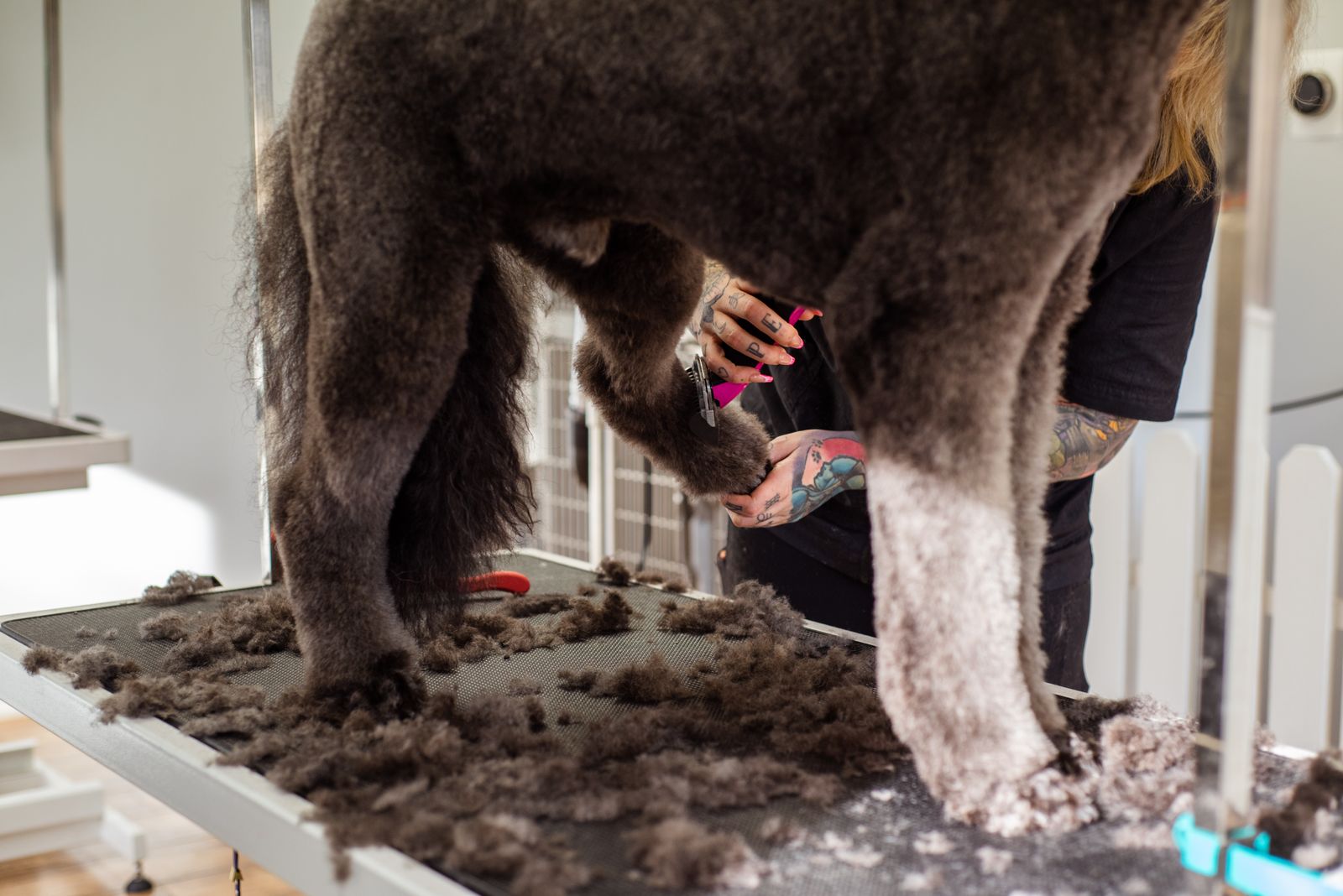
Gentler grooming, step by step
- Do the home parts at home, in pieces. Brush a lying-down dog for five minutes at a time on different days, and trim or check nails weekly. Short home sessions mean the salon visit can focus on the bath and cut.
- Brief the groomer like it matters. List arthritis, sore joints, lumps and their locations, medications, hearing or vision loss, and any handling the dog has started to resist. Specifics prevent injuries.
- Choose the comfort cut. Pick one practical length that dries fast and resists mats. Skipping a demanding style is not giving up on looks; it is shortening the appointment the dog must stand through.
- Split the appointment when needed. Bath and nails on one visit, haircut on another a week later. Two short outings beat one long one for a dog who fades halfway through.
- Ask for the handling adjustments. Non-slip surfaces, a low tub or ramp rather than a high lift, warm water, rest breaks, and permission for the dog to sit or lie down during drying should all be normal requests.
- Schedule for the dog's best hours. Many arthritic dogs move best late morning, after stiffness eases. A first appointment of the day also means less waiting in a busy salon.
- Judge by the evening, not the exit. A dog who eats, settles, and is herself by bedtime handled the groom well. Soreness, stiffness lasting into the next day, or skipped meals means the next visit should be shorter or split.
The parts you can do yourself
Home care carries more weight with a senior than with any other dog. Keep the coat brushed in the friction zones so mats never force a long dematting session. Keep nails short, because overgrown nails push arthritic toes out of alignment and make every step on Lancaster sidewalks and hardwood floors harder. Wipe faces, check ears, and run your hands over the body weekly; you will find new lumps weeks before anyone else, simply because you touch the dog most.
Bathing at home can work for some seniors, in a tub with a non-slip mat and warm water, as long as drying is thorough. A thick coat left damp against thin old skin invites irritation, so if you cannot dry the dog completely and comfortably, that part belongs to the salon's equipment and extra hands.
Where the professional line sits
Groomers manage comfort; veterinarians manage pain and disease. A senior who cries out during handling, who has started snapping at feet or face work, who has open sores under mats, or whose weight has dropped noticeably under the coat needs a vet visit before or alongside grooming. Some dogs reach a stage where the kindest groom happens at a clinic, sometimes with sedation, because being awake for it is genuinely too much.
There is no failure in that progression. Lancaster dogs who were groomed happily for years sometimes finish their grooming lives in a clinical setting, and the owners who arrange it are doing right by them. The goal at every stage stays the same: a clean, comfortable dog whose care never costs more than she can give.
Keeping trips short and familiar
Familiarity is a senior dog's best sedative, and it is free. The same salon, the same staff, the same routine, at regular intervals, turns grooming into one of the known events in a shrinking world. That is the practical argument for a salon close to home base: less travel, less waiting, and people who remember how your dog was last month and notice how she is today.
Common questions
How often does a senior dog need grooming?
Often enough that each visit stays short and the coat never mats. For many seniors that means regular tidy appointments on a steady schedule rather than occasional full grooms after long gaps.
Should my old dog's coat be cut shorter than before?
Usually, yes. A shorter comfort clip dries faster, needs less brushing, and cuts standing time. Keep enough length to protect thin skin from sun and scrapes.
My senior dog has started snapping at the groomer. What now?
Treat it as a pain signal first. Have a veterinarian check joints, teeth, and ears, and tell the groomer what you learn. Many dogs settle again once the painful cause is addressed.
Photos in this guide are representative stock images.
← All guides from Puppy Palooza Pet Spa & Boarding← Back to Puppy Palooza Pet Spa & Boarding