A mat does not appear overnight. It starts as a loose tangle in a spot that rubs, collects moisture on a humid Lancaster day, gets washed without being brushed out first, and tightens a little more each week until it sits against the skin like felt. By the time many owners find it, under a collar or behind an ear, the dog has been carrying it for a while. Understanding the calendar of how a coat gets into trouble across the year is the easiest way to stay ahead of it.
Puppy Palooza Pet Spa & Boarding handles grooming, baths, and haircuts alongside overnight boarding. Mats are the most common reason a requested style turns into a much shorter cut, and almost every case follows the same preventable pattern.
How a tangle becomes a mat
Loose hair sheds into the coat and, instead of falling out, wraps around standing hair. Friction does the tightening: collars and harnesses rubbing the neck and chest, armpits moving with every step, ears flapping against the neck, a tail wagging against the rear. Add water and the process speeds up. A dog who swims, plays in sprinklers, or gets bathed at home and air-dries without a brush-out will felt faster than a dog who stays dry, because wet tangles dry into tighter ones.
Under the mat, the skin suffers. Air cannot reach it, moisture stays trapped, and the mat pulls with every movement. Bruising, sores, and infections can hide underneath, which is why groomers sometimes find a dog flinching long before they see the skin. A mat is not just an appearance problem. It is a comfort and health problem on a slow timer.
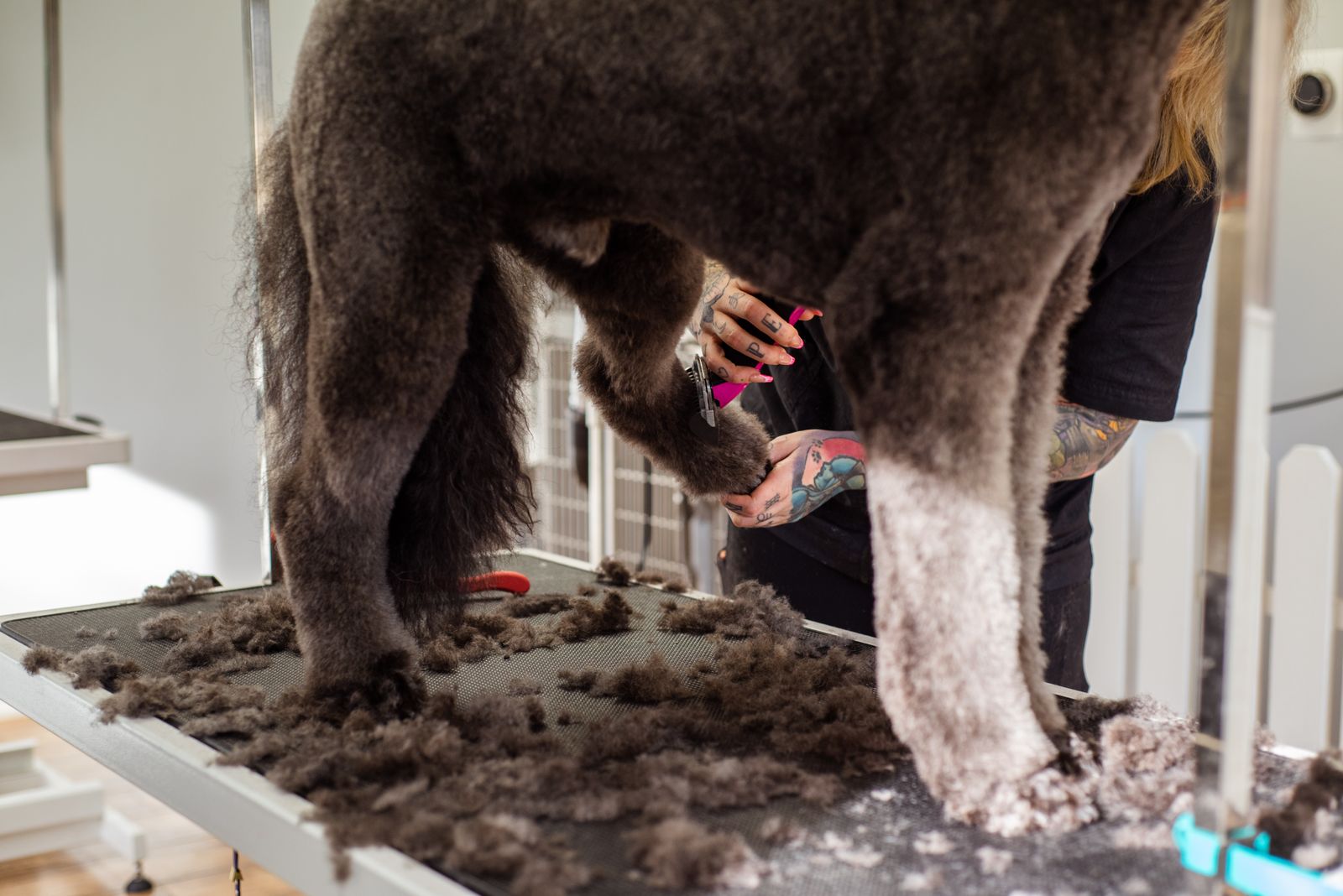
A year of coat risk in the Piedmont
| Season | What happens to coats | Where mats start | What to do |
|---|---|---|---|
| Spring | Winter coats loosen and shed; pollen season makes dogs scratch and rub. | Behind the ears, collar line, chest | Brush and comb-check weekly as the coat blows; book a de-shedding groom before the coat packs down. |
| Summer | Humidity, swimming, sprinklers, and frequent baths felt wet tangles tight. | Armpits, belly, rear, anywhere a harness sits | Brush out before every bath and dry fully after; keep friction zones trimmed short in heavy coats. |
| Fall | The second coat blow arrives; burrs and seeds from yards and fields catch in longer hair. | Legs, tail, ear feathering | Comb after outdoor time, pick debris out the same day, and schedule a tidy before winter length grows in. |
| Winter | Longer styles are kept for warmth; sweaters and coats rub the same spots daily. | Chest and armpits under clothing, neck under collars | Brush before the sweater goes on, rotate clothing, and keep up comb-checks even though baths are less frequent. |
Why dematting has limits
Dematting means working tangles out with brushes, splitters, and patience while the dog stands and endures the pulling. For a few small, loose mats on a tolerant dog, that is reasonable. For a coat matted to the skin across the body, it becomes an hour or more of steady discomfort, with the skin underneath already irritated. The dog does not understand that the groomer is helping. He learns that grooming hurts.
That is the humane line groomers draw. Past a certain point, the kind option is to clip under the mats and start the coat over, even when the owner had a longer style in mind. Clipping under a tight mat is also the safe option, because the clipper can slide between mat and skin under control, while brushing and cutting at a felted mat risks tearing or nicking skin that is already thin and sore. A short coat grows back in weeks. A dog's trust in grooming takes much longer to rebuild.
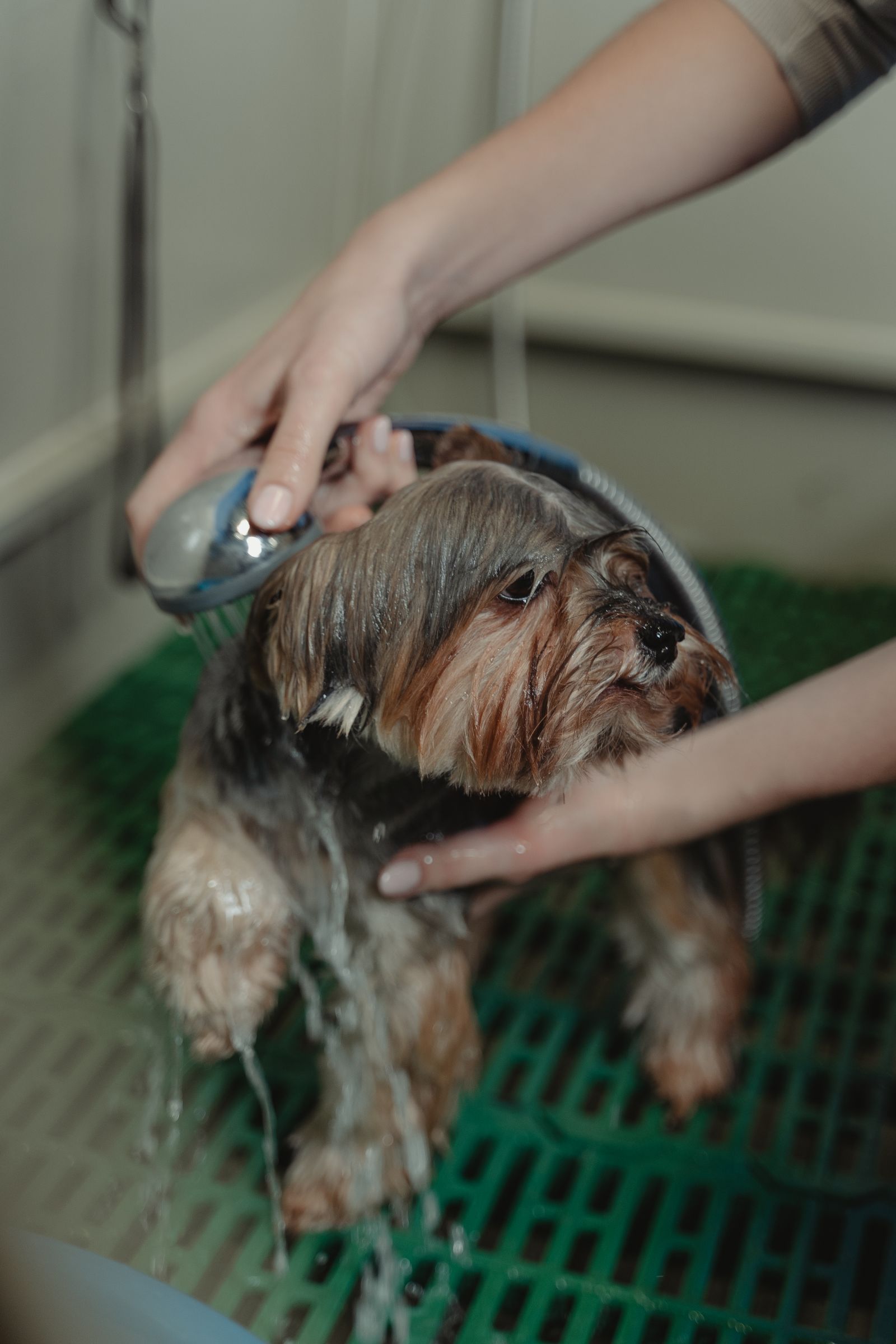
The bath trap, and other accelerators
The fastest way to make a tangle permanent is to bathe it. Water plus shampoo plus air-drying tightens loose hair into solid mat, which is why groomers insist on brushing out before the bath, never after as an afterthought. Home baths between grooms are fine, and good for the dog, as long as the coat is combed to the skin first and dried and brushed again after.
Boarding and play can accelerate things too, in a good-natured way. Dogs who wrestle, get wet, and roll in grass come home with coats that have had a workout, and a post-boarding brush-out in the first day or two catches tangles while they are still loose. Lancaster summers, with heat, humidity, and afternoon thunderstorms, give a damp, played-in coat everything it needs to felt if it sits unattended for a week.
Keeping the style you actually want
The pattern across the calendar is simple: coats mat on a schedule set by shedding, water, and friction, so prevention runs on a schedule too. Comb-checks in the friction zones a few times a week, a brush-out before every bath, and grooming appointments booked by the calendar rather than by how shaggy the dog looks will hold almost any reasonable style. When life gets busy and the coat gets ahead of you, say so at booking. A groomer who knows the coat is rough can allow the right time and talk honestly about what is salvageable before the appointment starts.
Common questions
Can all mats be brushed out if the groomer takes enough time?
No. Tight mats against the skin cause real pain and skin damage when pulled out, so groomers clip them instead. Time is not the limiting factor; the dog's comfort is.
Why did my dog have to be cut so short?
Clippers must pass under the mat, between the felt and the skin, so the remaining length is set by where the mats sit. The coat grows back, usually noticeably within a few weeks.
Does a shorter cut prevent mats entirely?
Shorter coats mat far less, but friction zones can still tangle, especially behind the ears and under collars. A brief comb-check each week keeps even short styles clean.
Photos in this guide are representative stock images.
← All guides from Puppy Palooza Pet Spa & Boarding← Back to Puppy Palooza Pet Spa & Boarding