When Lancaster summers settle in, with heat, humidity, and pavement that stays hot into the evening, shaving a thick-coated dog down looks like mercy. Owners ask for it with the best intentions. The surprise is that a dog's coat is not a sweater the dog is stuck wearing. For many breeds it is insulation and shade at once, and taking it too short can leave the dog hotter, sunburned, and growing back a coat that never quite matches the original.
Puppy Palooza Pet Spa & Boarding does haircuts, baths, and blow-outs through the summer. This seasonal guide covers what to do before the heat peaks, what to skip, and how to protect the places a coat does not cover.
How a double coat actually works in heat
Double-coated breeds, retrievers, shepherds, huskies, spitz types, and many mixes, carry a soft undercoat under longer guard hairs. In winter the undercoat traps warmth. In summer the dog sheds much of it, and the remaining guard coat shades the skin while allowing air to move at the surface. That system, thinned by a proper brush-out and de-shedding groom, handles Piedmont heat the way the breed was built to handle weather generally.
Shaving cuts through both layers and removes the shade. Skin that has never seen direct sun is suddenly exposed to it, on a dog who lies in sunny yards and walks on bright pavement that reflects heat upward. The undercoat also tends to grow back faster than the guard hairs, so a shaved double coat can return thicker, patchier, and more prone to packing and matting, sometimes permanently in older dogs.
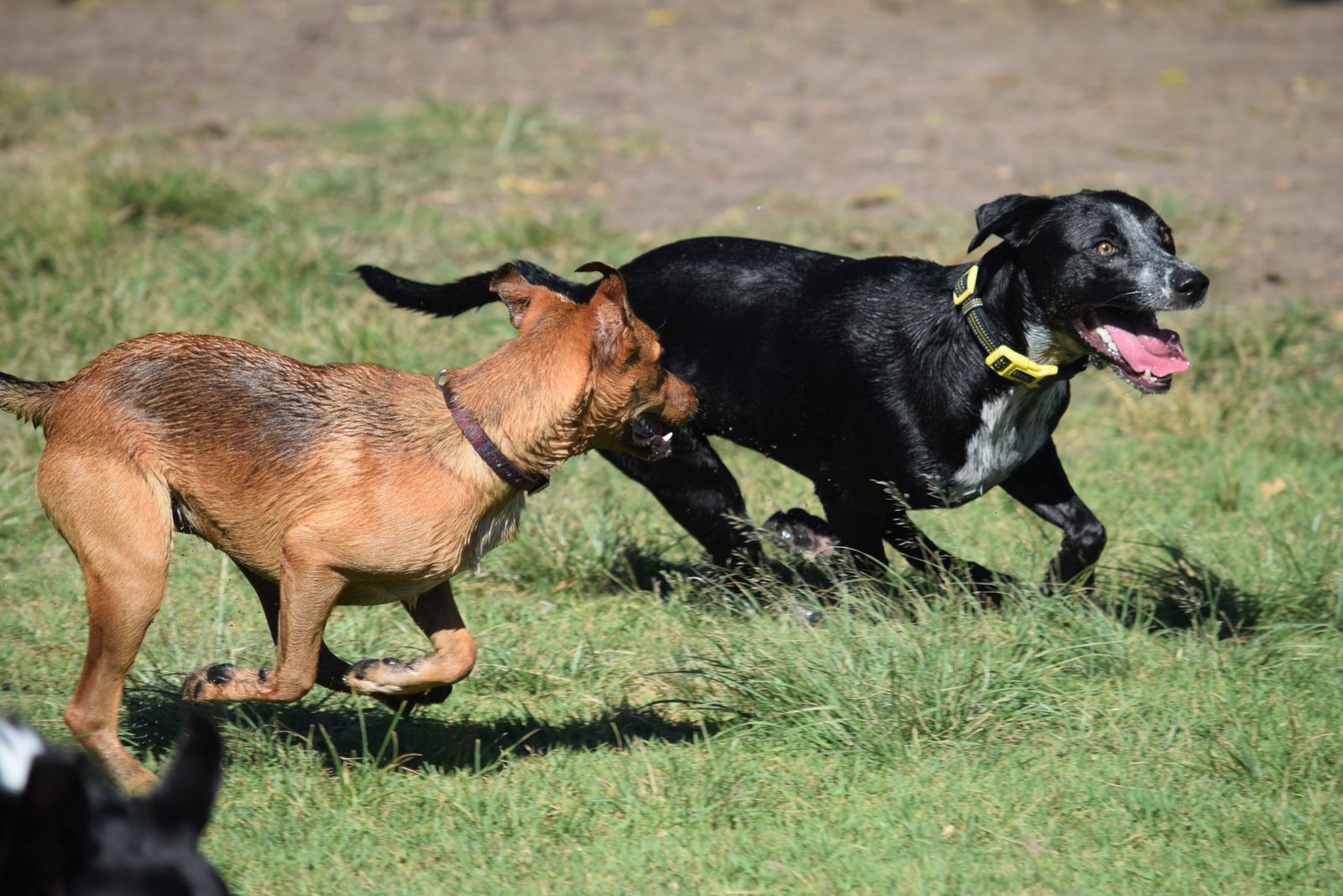
Before the season turns: a summer checklist
Summer coat and heat checklist
- Book a de-shedding brush-out in late spring. Removing loose undercoat is the correct summer cut for a double coat. The guard coat stays, the insulation that causes overheating goes.
- Choose trims, not shaves, for single coats. Poodles, doodles, and similar coats can go shorter for summer, but leave enough length to shade the skin, and keep friction zones tidy to prevent mats.
- Check bellies and armpits for thinning coverage. Short or clipped areas, pink skin, and sparsely haired bellies burn fastest. Note them for sunscreen conversations with your vet.
- Test pavement before walks. Press the back of your hand to the pavement for several seconds. If it is too hot to hold comfortably, it is too hot for paws; walk on grass or wait for evening.
- Plan shade and water for outdoor time. Dogs at boarding play yards, ball games, and lake days need both, on a schedule, not just when they ask.
- Watch the high-risk dogs hardest. Dark coats in direct sun, very young and old dogs, flat-faced breeds, and overweight dogs overheat sooner and need shorter outdoor sessions.
- Know the overheating signs. Heavy panting that does not settle, thick drool, wobbliness, or a dog who stops and will not continue means shade, water, and cooling now, and a vet if signs do not ease quickly.
Sunburn is real, and it lands where the coat is thin
Dog sunburn follows the same map as human sunburn: the places with the least cover burn first. Noses, ear tips, bellies of dogs who sunbathe on their backs, and any area clipped short for surgery or matting are the usual sites. White and light-coated dogs burn more readily than dark ones. Burned skin is pink to red, tender, and later flaky, and repeated burning over years is hard on skin health, just as it is for people.
Shade is the first defense, and timing is the second: midday sun in a South Carolina July is a different exposure than morning sun. Pet-safe sunscreen exists for noses and ear tips, but human products are not automatically safe for animals who lick everything, so ask a veterinarian which product to use rather than borrowing from your own beach bag.
Paws and pavement, the other summer burn
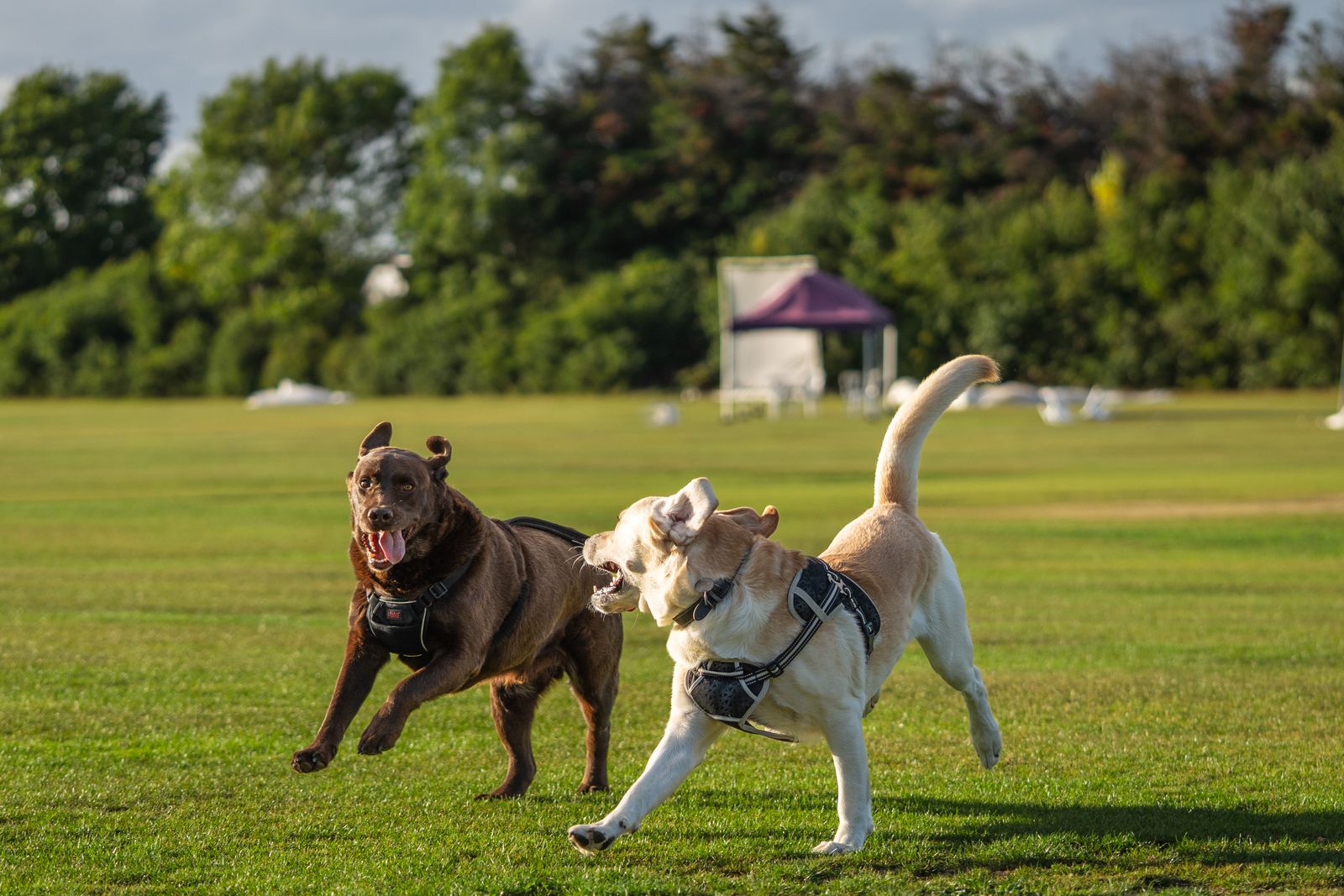
More summer paw injuries come from pavement than from any other source. Asphalt and concrete in direct sun get far hotter than the air, and a dog walking politely beside you may be blistering his pads without dramatic signs until the evening, when he starts licking and limping. The hand test in the checklist is the standard check. Grass, shaded sidewalks, and early or late walks solve most of it.
After walks on hot or rough ground, look at the pads. Cracks, redness between the toes, and pads that look worn smooth and tender all call for rest and, if limping persists, a veterinary look. Booties help some dogs and infuriate others; a dog who will not walk normally in them is safer walked on grass at cooler hours instead.
So what should the summer groom be?
For double coats: a thorough bath, blow-out, and brush-out that removes the loose undercoat, plus tidy trims on feet, belly, and sanitary areas. For single and curly coats: a shorter but not shaved length that keeps skin shaded and reduces matting in humid weather, which also dries faster after summer baths and swims. For every dog: nails kept up, since long nails change how the foot lands on hot ground, and ears checked, since summer moisture is hard on them. That package cools the dog by helping the coat do its job, rather than by removing the coat and hoping for the best.
Common questions
Will shaving my double-coated dog make her cooler?
Usually not. The guard coat shades skin and allows airflow, so removing it can increase sunburn and heat exposure. A proper de-shedding brush-out is the effective summer treatment.
How short is too short for a summer cut?
If skin shows through easily and looks pale and exposed, it is too short for sun safety on most dogs. Leave enough coat to shade the skin, especially on single-coated breeds kept in a summer clip.
Does a shaved coat always grow back normally?
Single coats generally regrow fine. Double coats can regrow unevenly, with undercoat outpacing guard hairs, and older dogs sometimes never regain the original texture. It is a real risk to weigh before shaving.
Photos in this guide are representative stock images.
← All guides from Puppy Palooza Pet Spa & Boarding← Back to Puppy Palooza Pet Spa & Boarding